Book Appointment Now

CAMEROON: Bangladesh–Cameroon Bilateral Relations and Trade Potential
1. Country Profile
Country Name: Republic of Cameroon (French: République du Cameroun).
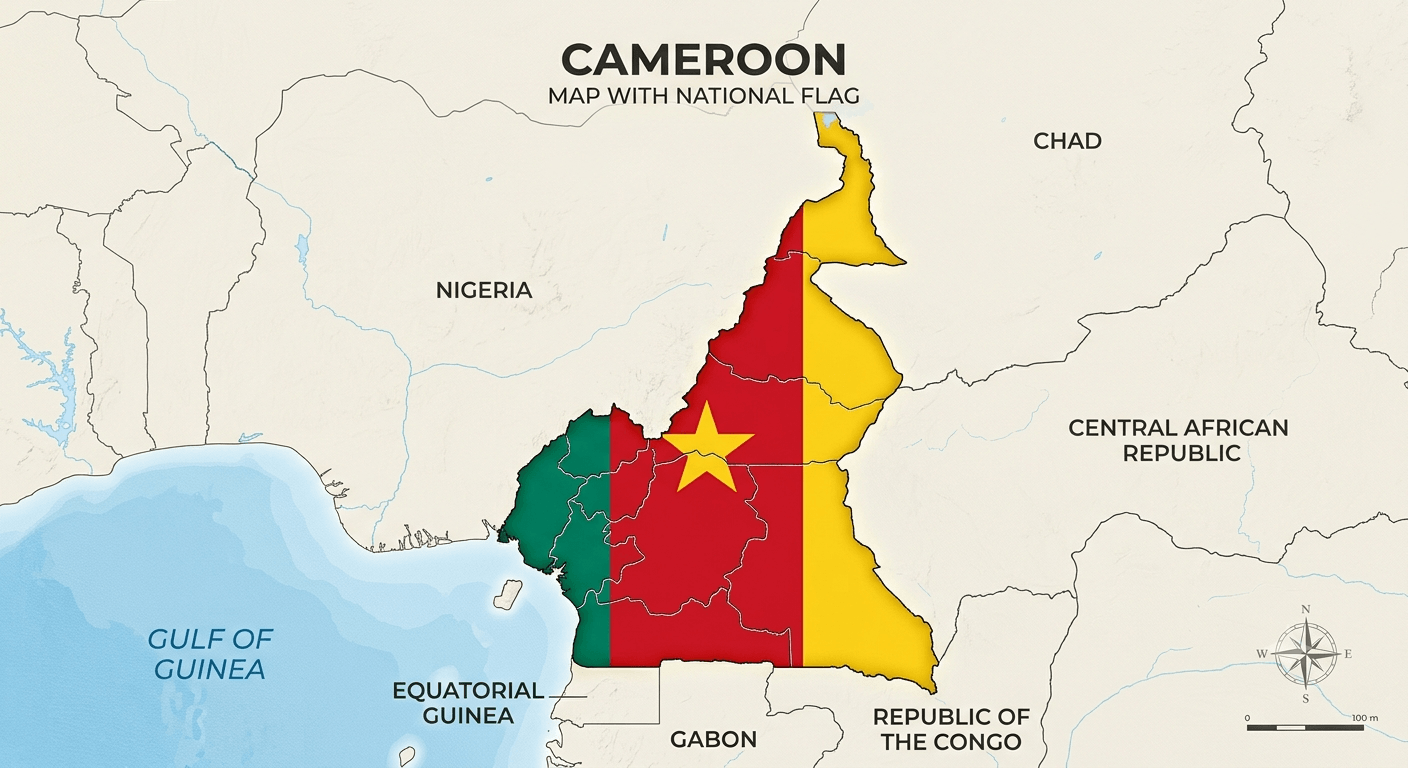
Geographical Location: Central/West Africa on the Gulf of Guinea, bordered by Nigeria, Chad, Central African Republic, Congo, Gabon and Equatorial Guinea; land area ~475,442 km²; population ~30.06 million (2025 est., World Bank).
Political System: A republic with a strong presidential system under the 1972 Constitution (amended 1996). President Paul Biya, in power since November 1982, was re-elected on 12 October 2025 for an eighth term with 53.66% of the vote, extending his rule to 2032. The ruling CPDM holds 152 of 180 National Assembly seats and 94 of 100 Senate seats (Constitutional Council; CNN/AFP, October 2025).
Economic Overview: A lower-middle-income economy with nominal GDP of ~US$51.3–53.3 billion (2024) and GDP per capita of ~US$1,467–2,027. Real GDP growth was 3.5% (2024) and 3.7% (2025 est.), driven by the non-oil sector, while oil output fell 8.82% in 2025. Government debt was 43.4% of GDP at end-2024 (World Bank; AfDB Economic Outlook, 2025).
Agricultural Sector: Agriculture, forestry and fisheries contributed ~17.4–19% of GDP in 2024 and employ 32–43% of the labour force. Key crops: cocoa (295,028 tonnes, world’s 5th largest producer; exports over CFAF 1 trillion in 2024), cotton, coffee, rubber, palm oil, cassava, maize and plantain (Africa’s 2nd-largest plantain exporter) (World Bank; ISS African Futures, 2026).
Industrialization and Manufacturing Sector: Industry contributed ~17.2–25.5% of GDP (2023–24). Main industries: petroleum refining, aluminium smelting, food processing, textiles, light consumer goods and timber processing. Under the SND30 (2020–2030) strategy targeting 8% annual growth, the actual 2019–2024 average was 2.9% (CIA World Factbook; Ecofin Agency, 2025).
2. Trade and Economic Profile
Export and Import Overview: Merchandise exports totalled ~US$7 billion and imports ~US$10.58 billion in 2024, a persistent deficit; current account deficit was 3.2% of GDP (2024), widening to 3.9% (2025). Ten partners account for 77.1% of exports, led by the Netherlands (23.2%) and France (12.3%); Bangladesh ranks 7th at 4.3% share (CIA World Factbook; INS/Business in Cameroon, 2024).
Major Export Products: Crude petroleum and refined products, cocoa beans, raw cotton, sawn timber, aluminium, coffee and rubber.
Major Import Products: Machinery and electrical equipment, transport equipment, refined fuel and food products.
Gross Domestic Product (GDP): Nominal: ~US$51.3 billion (2024) to ~US$53–60.6 billion (2025 est.). PPP: ~US$173.3 billion (2025). Per capita: US$1,467 (2024) rising to US$2,027–2,125 (2025–26 est.) (World Bank; Worldometer/UN, 2026).
Detailed GDP Analysis: Real growth: 3.2% (2023), 3.5% (2024), 3.7% (2025), averaging 3.9% projected for 2025–28. Sectoral shares (2023–24): services ~50–55%, agriculture ~17–19%, industry ~17–25%. Inflation fell from 7.4% (Dec 2023) to 4.1% (mid-2025), nearing the CEMAC 3% target by 2027. Poverty (below US$3.65/day, 2017 PPP) affects ~46.4% (~13.2 million people); unemployment was projected at 9.8% in 2025 (World Bank; AfDB; ISS African Futures, 2026).
Major Industrial Products: Refined petroleum products, aluminium, processed cocoa/cocoa paste, cement, processed timber, cotton fibre and light manufactured consumer goods.
3. Education
Cameroon runs a bilingual (French/English) system: six years of primary, seven of secondary, and tertiary education through public universities (Yaoundé I & II, Douala, Buea) and private institutions.
Literacy Rate: Adult literacy (15+) was 78.23% in 2020, up from 77.07% (2018) and 54.63% (1976) (World Bank/UNESCO Institute for Statistics, latest available data).
Educational Status and Human Capital Development: Learning poverty (children unable to read an age-appropriate text by age 10) is estimated at 72%, reflecting quality gaps despite reasonable enrolment. Government is addressing this partly through an Islamic Development Bank-financed CFA 6 billion basic education project (UNESCO/World Bank IICBA, 2024; Business in Cameroon, 2025).
4. Health and Social Indicators
Social Development: Cameroon ranks 155th of 193 on the 2025 Human Development Index (medium category); the Multidimensional Poverty Index shows 43.6% of the population (~11.86 million people) multidimensionally poor, with a further 17.6% vulnerable (UNDP HDR/MPI Country Profile; AfDB, 2025).
Economic Development: GNI per capita (PPP, constant 2021 US$) was ~US$4,880 in 2024; monetary poverty (US$3.65/day, 2017 PPP) affects 46.4%; the Gini coefficient is 42.2 (2014 data).
Literacy and Illiteracy Rates: Adult literacy is 78.23% (2020), implying illiteracy of ~21.8% among those aged 15+.
Nutrition: Between November 2023 and October 2024, ~400,000 children aged 6–59 months faced acute malnutrition, including ~147,000 severe cases; over 12,000 pregnant/breastfeeding women were affected. Stunting in children under five fell from 35% (2004) to 23% (2022), though undernutrition remains serious in rural and conflict-affected regions (IPC, 2024; WFP Cameroon, 2025; DHS-based study, 2026).
Human Development and Other Key Indicators: Combined youth unemployment/underemployment reached ~74% in 2024; the labour force totalled ~11.1 million with a 62.9% employment rate.
5. Bangladesh–Cameroon Bilateral Relations
Bangladesh and Cameroon maintain formal diplomatic relations but neither has a resident embassy in the other’s capital; both countries’ interests are covered through neighbouring accreditations (Embassies.net directories, 2025–26).
Cooperation has occurred mainly through multilateral platforms rather than dedicated bilateral channels; Cameroon has engaged Islamic Development Bank/OIC-linked financing (e.g., the CFA 6 billion education loan), connecting it to the same institutional network as Bangladesh.
Trade relations are modest in absolute terms but notable given the absence of resident missions: Bangladesh was Cameroon’s 7th-largest export destination in 2023, an economically meaningful, if under-institutionalized, relationship.
6. Bilateral Trade Analysis
Products Cameroon Imports from Bangladesh: UN COMTRADE data show a small, diversified basket led historically by made textile articles/worn clothing, electrical/electronic equipment, furniture and lighting, vehicles, plastics and pharmaceuticals; imports from Bangladesh totalled ~US$2.43 million (2023) and US$4.25 million (2018).
Products Bangladesh Exports to Cameroon: Garments (knit/woven), electrical/electronic goods, furniture, plastics and small volumes of pharmaceuticals and vehicles (same COMTRADE series).
Products Cameroon Exports to Bangladesh: Trade runs heavily the other way: Cameroon exported ~US$171.37 million to Bangladesh in 2021, of which raw cotton alone was US$162.64 million—supplying Bangladesh’s textile and spinning industry (UN COMTRADE via Trading Economics, 2024). HS-code-level EPB data: The Export Promotion Bureau publishes HS-code country breakdowns via its export statistics portal (epb.gov.bd) and Exporter Database (edb.epb.gov.bd), organized mainly by sector (HS 61– 62 knit/woven apparel, HS 63 other made-up textiles, HS 85 electrical machinery, HS 94 furniture). A Cameroon-specific, line-item HS breakdown was not separately published in sources reviewed; EPB’s Cameroon bulletin should be consulted directly for exact current figures. Bangladesh Bank data: The Annual Report classifies trade financing by broad region/partner groupings rather than isolating Cameroon, reflecting low transaction volume. No dedicated correspondent banking or standing Letter of Credit (L/C) facility specific to Cameroon was found; transactions appear routed through general international correspondent banking channels (Bangladesh Bank Annual Report; EPB Export Statistics Portal, 2025–26).
7. International Cooperation
Bangladesh and Cameroon are both full members of the United Nations, the Organisation of Islamic Cooperation (OIC), the Non-Aligned Movement, and the World Trade Organization (WTO). Cameroon is one of eight Christian-majority full OIC members (alongside Benin, Mozambique, Togo, Uganda, Gabon, Suriname, and Guyana). Cameroon hosted the OIC’s 50th Council of Foreign Ministers session in Yaoundé from 29–30 August 2024, attended by around 500 delegates from 57 member states.
Source: OIC Secretariat/Union of News Agencies of OIC Countries; VOA News, August 2024; Wikipedia, Member States of the OIC, 2025.
Shared OIC and UN membership has provided a diplomatic backdrop for cooperation—for instance, Islamic Development Bank financing to Cameroon’s education sector—but has not yet translated into a formal bilateral trade or investment agreement between Bangladesh and Cameroon. No dedicated strategic partnership, preferential trade arrangement, or joint commission between the two countries was identified in the sources reviewed.
8. Opportunities for Bangladeshi Citizens in Cameroon
Higher Education: Cameroon’s bilingual (French/English) public universities offer relatively low-cost options, though English-language capacity is concentrated in Anglophone-region institutions (e.g., University of Buea); numbers of Bangladeshi students currently enrolled are not separately tracked in available UNESCO or Cameroonian ministry statistics.
Employment and Labour Migration: Cameroon’s own youth unemployment/underemployment rate of about 74% (2024) limits large-scale formal labour absorption capacity for foreign workers; opportunities are likely to be concentrated in technical/garment-sector expertise linked to the cotton trade, rather than mass labour migration.
Visa Facilities: Cameroon requires a visa for Bangladeshi passport holders, obtainable through the nearest Cameroonian diplomatic mission, since there is no resident Cameroonian mission in Dhaka.
Export Opportunities: Given Bangladesh’s cotton import dependence, Bangladeshi trading houses and textile firms have a clear, evidence-based opening to deepen direct sourcing arrangements with Cameroonian cotton exporters, alongside exporting Bangladeshi garments, pharmaceuticals, plastics, and light manufactures to Cameroon’s growing consumer market of over 30 million people.
Citizenship/Long-Term Residency: No bilateral agreement facilitating expedited residency or citizenship for Bangladeshi nationals in Cameroon was found; standard Cameroonian immigration and residency law applies uniformly to foreign nationals.
9. Opportunities for Cameroon from Bangladesh
High-Potential Import Products: Ready-made garments, pharmaceuticals (Bangladesh exports low-cost generic medicines regionally), jute and jute goods, ceramics, light engineering goods, and processed foods—categories in which Bangladesh has established export competitiveness and Cameroon’s import basket already shows demand for machinery, textiles, and consumer goods.
Investment Opportunities: Joint ventures in textile/garment manufacturing (leveraging Cameroonian raw cotton for value-added processing before export), pharmaceutical formulation and packaging, and agro-processing (cocoa, cassava) are underexplored given Bangladesh’s manufacturing base and Cameroon’s raw-material supply.
Industrial Cooperation: Given Cameroon’s cotton output and Bangladesh’s spinning/weaving capacity, a cotton-to-textile value chain partnership (raw cotton export, potential technical assistance in ginning and yarn production) represents the most evidence-based cooperation area, building on the existing US$162.64 million cotton trade flow.
Other Sectors: Capacity-building in agro-processing technology, power/renewable energy equipment, and light manufacturing know-how, areas where Bangladesh has domestic industrial experience relevant to Cameroon’s SND30 industrialization goals.
10. Trade Associations and Future Prospects
No documented formal collaboration was found between major Bangladeshi trade bodies (e.g., FBCCI, BGMEA, BKMEA) and Cameroonian counterparts (e.g., Chamber of Commerce, Industry, Mines and Crafts of Cameroon). Existing institutional links remain largely informal, channelled through general Bangladesh–Africa business networks, such as the Bangladesh-Africa Business Forum’s broader regional outreach that has flagged Cameroon’s rising demand for textile and pharmaceutical imports.
Source: africabangladesh.com, Bangladeshi Missions in Africa report, July 2025.
Future prospects are anchored in three concrete facts: Bangladesh’s position as Cameroon’s 7th-largest export market (4.3% share, 2023 INS data); the near-total dependence of that trade on a single commodity (raw cotton); and the complete absence of resident diplomatic missions, formal chamber-to-chamber ties, or a bilateral trade/investment agreement. Formalizing these existing flows—rather than starting from zero—is the most realistic near-term path to expanded cooperation.
11. Recommendations
- Establish direct chamber-to-chamber contact between Bangladesh’s FBCCI/BGMEA and Cameroon’s national Chamber of Commerce to formalize the existing cotton trade and identify garment/pharmaceutical export openings.
- Encourage Bangladesh Bank and Cameroonian banks (under BEAC/CEMAC supervision) to establish a correspondent banking or L/C facilitation arrangement specific to Bangladesh–Cameroon trade, reducing reliance on third-country intermediation.
- Pursue a bilateral Trade and Investment Framework or MoU that references the concrete 2021–2023 COMTRADE trade figures cited in this report as a baseline for target-setting.
- Explore feasibility of resident diplomatic representation, or at minimum a dedicated commercial counsellor position, given Cameroon’s ranking among Bangladesh’s top-10 export markets in Africa.
- Use shared OIC and UN platforms to raise bilateral economic cooperation formally, building on Cameroon’s demonstrated engagement with Islamic Development Bank financing.
- Support Bangladeshi textile firms in developing direct sourcing/joint-venture arrangements with Cameroonian cotton producers to add value before export, benefiting both economies.
- Commission updated, Cameroon-specific HS-code trade data directly from EPB and Bangladesh Bank’s Annual Report for precise, current-year monitoring, since consolidated bilateral figures beyond 2021–2023 were not publicly available at the time of this report.
Note: This report draws on publicly available data from the World Bank, IMF-linked and African Development Bank publications, UNDP/UNESCO, UN COMTRADE, Trading Economics, Bangladesh’s Export Promotion Bureau (EPB), and news reporting current through mid-2026. Bilateral trade figures specific to Bangladesh and Cameroon are limited in recency (most granular COMTRADE data available for 2021–2023); readers requiring